



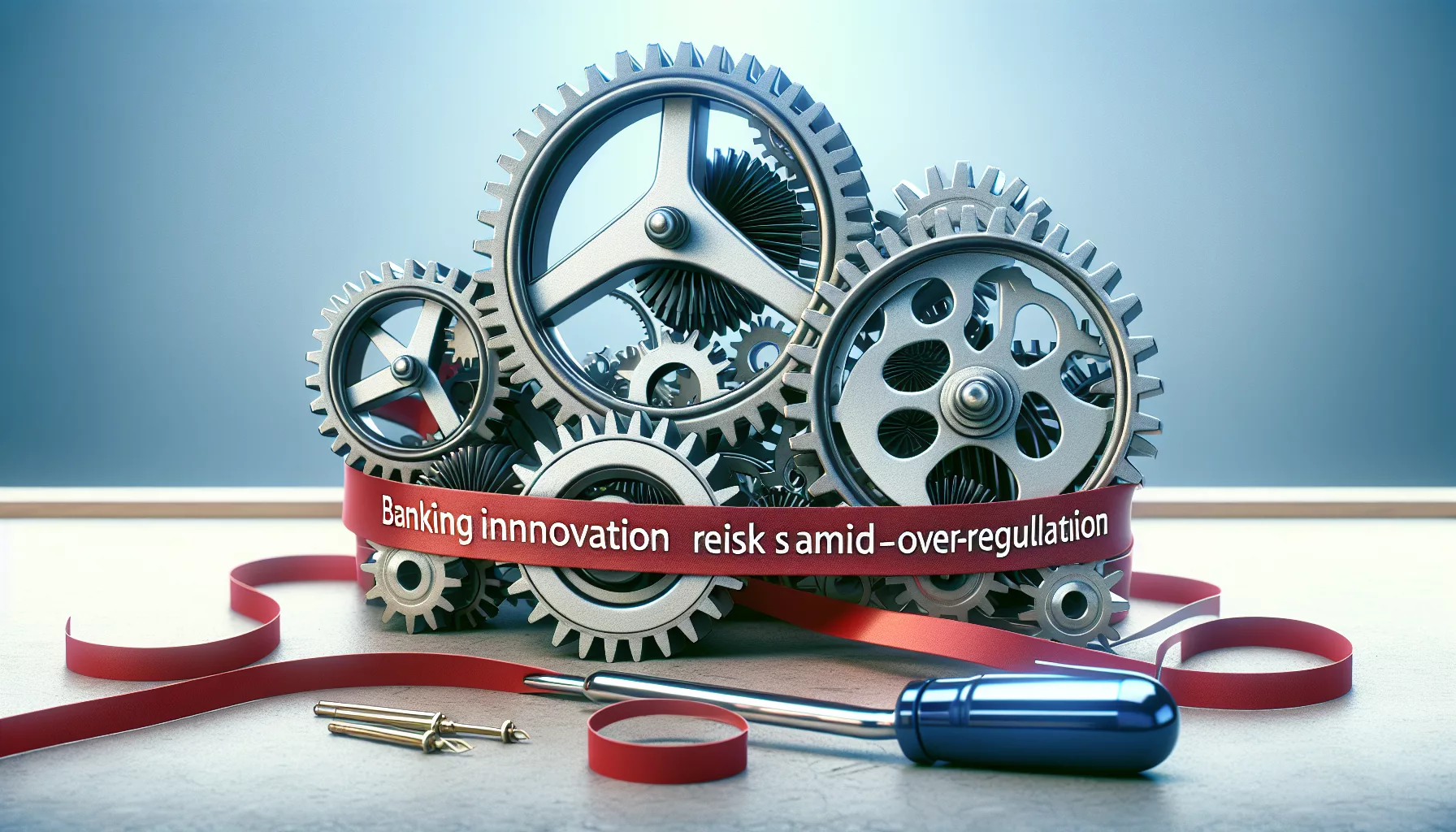
In December 2025, the financial sector faces a pivotal challenge as it grapples with maintaining innovation within a heavily regulated environment. The banking industry has long been a bedrock of economic stability, yet its future growth is now threatened by an overemphasis on order and control, which could stifle the creative disruptions necessary for advancement.
Central to this concern is the concept of controlled chaos, a theory positing that a certain level of disorder and tension within a system can actually drive progress. In the context of banking, this means allowing for pockets of autonomy and innovation within the overarching framework of safety and compliance regulations. The idea is reminiscent of how other sectors, such as technology, have thrived on iterative failure and rapid innovation cycles.
Historically, banking has been synonymous with structure and reliability. The industry’s foundational role in the global economy necessitates strict adherence to regulations that ensure stability and prevent crises, such as those witnessed during the 2008 financial collapse. These regulations have evolved over time, becoming more stringent and encompassing, thus creating a paradox where the mechanisms designed to prevent failure may now also impede necessary innovation.
The push for innovation within banking isn’t just a modern fad; it’s a response to a rapidly changing market landscape. The rise of fintech companies, which leverage technology to provide financial services, has challenged traditional banks to adapt or risk obsolescence. These fintech enterprises operate with greater agility, often unconstrained by the regulatory burdens that weigh on established financial institutions. As a result, they are able to introduce new products and services at a faster pace, capturing market share and setting new standards for customer expectations.
In order for traditional banks to compete, they must learn to navigate this balance between regulatory compliance and innovative flexibility. Some financial institutions have attempted to mimic the startup culture by creating internal innovation labs or partnering with fintech firms. These efforts aim to foster a culture of experimentation within a typically risk-averse environment, encouraging employees to think creatively while still adhering to necessary regulatory frameworks.
However, this strategy is not without its challenges. The primary risk lies in the potential for regulatory breaches, which can have significant repercussions, including hefty fines, reputational damage, and loss of consumer trust. Moreover, the integration of innovative practices within a rigid structure often leads to friction, as the speed at which innovation occurs can be stifled by the slower pace of regulatory approval processes.
To illustrate, consider the case of blockchain technology. Once heralded as a revolutionary advancement with the potential to transform banking, its adoption has been slow due to regulatory bottlenecks. While blockchain can offer enhanced security, transparency, and efficiency, ensuring that these benefits align with existing regulations can be a complex and cumbersome task. This delay in adoption highlights a broader issue: the need for regulators to evolve alongside technological advancements, adopting frameworks that accommodate new innovations without compromising financial security.
Globally, different countries have taken varied approaches to this dilemma. Some, like Estonia, have embraced digital transformation with open arms, establishing favorable regulatory environments that promote technological experimentation in finance. Others, such as the United States, have been more cautious, balancing innovation with stringent oversight to protect against systemic risks. This global diversity in regulatory approaches provides a rich tapestry of learning experiences, which can guide future policy development in fostering innovation within safe parameters.
From a risk management perspective, the key is to create a regulatory sandbox—an environment where financial institutions can test new technologies and business models under the watchful eye of regulators. This allows for a controlled experiment where potential impacts can be assessed before wider implementation. Such sandboxes have been successfully employed in places like the UK and Singapore, where they have helped bridge the gap between innovation and regulation.
Despite these efforts, resistance to change remains a significant obstacle. Established banks often find it difficult to pivot from deeply entrenched processes and mindsets that have been developed over decades. Moreover, the cultural shift required to embrace a more dynamic approach to problem-solving can be daunting, particularly in an industry where risk is traditionally minimized, and predictability is prized.
Furthermore, the cost of innovation cannot be overlooked. Implementing new technologies and systems requires significant investment, which can be a deterrent for institutions operating on thin margins. For smaller banks, in particular, the financial burden of innovation may be prohibitive, limiting their ability to compete with larger, more resource-rich entities.
Looking forward, the path to sustaining innovation in banking will likely require a multifaceted approach. Industry leaders must advocate for regulatory reform that keeps pace with technological advancements while ensuring that safeguards against systemic risk are not compromised. Collaboration between regulators and financial institutions will be essential in crafting policies that encourage innovation without sacrificing stability.
Ultimately, the future of banking depends on its ability to embrace controlled chaos—a willingness to challenge the status quo within a framework of safety and accountability. By doing so, the industry can remain a foundational pillar of economic progress while also adapting to the needs and expectations of a rapidly evolving market. The journey ahead is fraught with challenges, but with thoughtful navigation, banking can emerge as a leader in innovation rather than a relic of the past.
Post Views: 1
